Commercial real estate

5 emerging areas that are attracting real estate investors

Explore specialized property types garnering attention as technology, housing needs, and constrained storage supply reshape commercial real estate.


Commercial real estate investors are looking beyond traditional property types as technological change, demographic shifts, and evolving business needs reshape market dynamics. Institutional and private investors have no intention of abandoning or swapping out the key sectors of residential, office, retail, and industrial.

But they’re also exploring specialized asset classes whose long-term demand and distinct market fundamentals can keep their portfolios adaptive as culture, technology, and markets evolve.

Today, investors are studying five emerging areas closely:

  • Industrial outdoor storage
  • Single-family rentals
  • Manufactured housing
  • Marinas
  • Data centers

Industrial outdoor storage

Historically, industrial outdoor storage (IOS) has been a fragmented space dominated by individually owned and operated properties. These facilities are essentially large, open yards where equipment owners can store trucks, trailers, materials, containers, and other large items. In the past half decade, industrial outdoor storage facilities have increasingly attracted the interest of investors.

Why demand is growing

IOS is a $228 billion market, with growth projected to reach $367 billion by 2033.Disclosure 1 The IOS market fills a critical need supporting several economic sectors: e-commerce, infrastructure, construction, logistics, and transportation.

Demand is also growing because supply is constrained. Zoning restrictions often limit locations for these facilities. This can lead to a supply shortage for outdoor storage, with some companies scrambling to find the storage they need. This high demand for outdoor storage motivates active tenants to keep current on rent and accept rent increases more willingly.

Why investors are paying attention

Smaller owner-operators frequently prioritize near-term cash flow, which can lead to accepting month-to-month or short-term leases. That time preference may create an opening for larger investors to reposition properties around more durable tenancy. “An abundance of investment-grade companies in need of storage space means many tenants are willing to pay higher rental rates and commit to longer leases,” says Nadia Mahmoud, managing director of real estate corporate and investment banking at Truist Securities.

With an average 123% IOS rent increase for 15 key markets between 2020 and 2025, institutional investors are aware of, and already acting on, the potential returns of the market. Since 2024, substantial acquisitions by major equity managers like Alterra IOS, J.P. Morgan, Realterm, and Catalyst have seen deals starting from the mid $100 million range.Disclosure 2 These investors appreciate the low overhead and capital expenditure requirements for these properties with minimal costs for construction, repair, and improvements. 

Single-family rentals

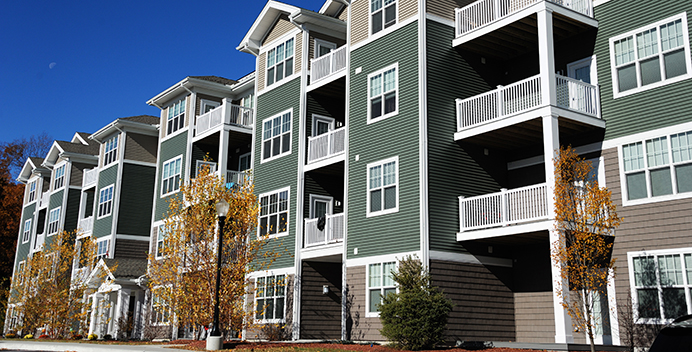
During the Great Recession, investors acquired vast portfolios of foreclosed homes, leased them for rental income, and in the process, institutionalized the single-family rental industry with a scattered-site approach. A second segment, build-to-rent communities, has seen explosive growth in the past couple of years.

“These new home communities, some with 200 units or more, are intentionally built as rentals,” says Mahmoud. “When holdings are that size or larger, builds and full acquisitions are much more feasible, and potentially lucrative, for large, publicly traded real estate investment trusts (REITs) and for institutionally backed platforms.”

Why demand is growing

Millennial and Gen Z buyers are turning to single-family rentals as a natural transition out of traditional apartment living. They look to gain access to more living space, private yards, and neighborhood amenities. The demand for single-family rentals is even more pronounced in the current market environment: Rentals now account for 16% of all single-family homes.Disclosure 3 And borrowing costs and interest rates are both increasing. “A shortage of homes for sale compounds the problem,” says Mahmoud. “Longtime owners are locked into low mortgage rates that they’re reluctant to swap for new loans at today’s higher rates.”

Why investors are paying attention

Today, institutional ownership has only scratched the surface and accounts for only 5% of the total single-family rental market share.Disclosure 3 Strong financial and operating fundamentals continue to support investor interest in both scattered-site single-family rentals and build-to-rent communities. Customer satisfaction is also a potential growth driver. More than a third of single-family rental occupants prefer rental to ownership for reasons like lack of down payment and the ability to quickly relocate to a new area.Disclosure 4

“Increasingly positive attitudes to home rental, newer construction, minimal capital expenditures, and ease of management are pulling in investors,” says Mahmoud.

Manufactured housing

Institutional capital has flooded into the manufactured housing sector. It has a reputation as a recession-proof haven that provides a reliable return to investors. At present, housing supply constraints, affordability advantages, and ongoing demand for attainable housing have positioned manufactured housing REITs to outperform other residential REIT categories.Disclosure 5

Why demand is growing

The United States’ shortage of affordable housing is no secret. Manufactured housing has a healthy profit margin compared to stick-built construction, faster assembly times, and quicker returns for the investors and businesses involved. On the consumer side, manufactured homes appear to be an increasingly popular solution to the housing shortage. Some 20.6 million U.S. citizens currently live in manufactured homes.Disclosure 6 Add to that capital improvements and industry marketing efforts, and manufactured housing is shedding the stigma it once carried.

Why investors are paying attention

Demand for affordable housing continues to shape investor interest in the sector, even as higher borrowing costs have slowed activity across commercial real estate. “Higher interest rates and tighter capital markets have impacted manufactured housing just like other real estate sectors,” says Mahmoud. “But its role in affordable housing, limited supply, fragmented ownership landscape, and expectation of ongoing demand is attracting investors from both large institutional firms and regional operators.”

Marinas

The marina industry exhibits attractive industry dynamics with steady demand for premium marina space and limited increases in supply. Environmental regulations, finite waterfront development opportunities, and the growing popularity of larger vessels have made new marina construction difficult, helping support long-term demand for existing facilities.Disclosure 7 The marina industry’s highly fragmented ownership also presents opportunities for institutional investors looking to consolidate marina portfolios.

Why demand is growing

New marina development is tightly constrained. This limited supply, combined with continued demand for marina space, has already attracted some of the world’s largest institutional investors and has strengthened the long-term outlook for the sector.Disclosure 8

Why investors are paying attention

“Scarcity and regulations that make new development difficult give operators pricing power, particularly along the coasts,” says Mahmoud. “Also, marina revenue isn’t limited to slip rentals. Ship stores, restaurants, boat clubs, boat rentals, sales, service, and repair can also make big contributions to income.”

Ongoing lack of supply and multiple revenue streams continue to strengthen a sector that has seen high transaction volume in recent years. The industry remains fragmented, creating opportunities for larger operators to consolidate portfolios, modernize facilities, and serve demand for premium slips and larger vessels. In the past decade, nearly 1,200 marinas and boatyards have been bought and sold. In 2025 alone, approximately 300 changed hands..Disclosure 8

Data centers

Artificial intelligence (AI) and cloud computing are driving unprecedented demand for data centers. “Computing needs and AI workloads continue to rise,” says Danny Stover, Truist Securities managing director of real estate, corporate, and investment banking. “Alongside that rise, developer investment in new facilities, and the infrastructure required to support them, is keeping pace.”

Research bears this out; independent of the outlook for other portions of the commercial real estate market, data centers remain one of the strongest areas of construction activity, fueled by consistent demand for computing power and infrastructure.Disclosure 9

Why demand is growing

Businesses increasingly rely on cloud-based platforms and AI applications to support daily operations and propel long-term growth.Disclosure 9 That demand drives continued investment in data centers and the electrical infrastructure needed to power them. Truist’s Building Products June 2026 Industry Update indicates data center real estate development remains the largest contributor to nonresidential planning growth.Disclosure 9

Why investors are paying attention

Data centers are now an established commercial real estate asset class supported by long-term demand from cloud providers, enterprise users, and AI developers. Continued investment in AI infrastructure, combined with long-term tenant commitments and significant barriers to new development, has kept institutional interest strong.Disclosure 10

Satisfying future demand also requires ongoing investment in power generation, transmission infrastructure, and utility capacity. In addition to considerations about the logistics and feasibility of these three factors, public skepticism about the scope and impact of construction and infrastructure placement is increasingly influencing where and how new data centers can be built. For investors, those infrastructure and environmental considerations are becoming as important as the facilities themselves when evaluating long-term opportunities.

Adjusting your CRE strategy for opportunity

Changes in real estate and the economy are shifting investor priorities and opening the door to new opportunities. Talk to your Truist relationship manager about the ways Truist can provide the insights, analysis, and financing that help you take advantage of trends in these emerging sectors.

Keep up with the opportunities offered by emerging real estate sectors.

Enhance your commercial real estate investment strategy with a team of professionals. Talk to your relationship manager to understand how Truist can help you select the sector, region, and property that aligns with your goals.

Truist Purple PaperSM Financial Foundations

Four cornerstones every business needs to support a successful expansion strategy.

Related resources

Commercial Real Estate Trends to Watch

Commercial Real Estate Trends to Watch

Commercial real estate Commercial real estate trends that can foster business growth

How your business’s physical space can support your company’s objectives

Article
09/24/2026
Commercial Real Estate Trends to Watch

Learn how commercial real estate decisions can support business growth, reduce costs, attract talent, and improve flexibility.
The Missing Middle and the Future of Workforce Housing

The Missing Middle and the Future of Workforce Housing

Industry Expertise Raising capital for workforce housing

How developers can align financing and incentives to support attainable housing projects.

Article
03/31/2026
The Missing Middle and the Future of Workforce Housing

Workforce housing gains momentum as incentives expand and affordability pressures rise, creating new opportunities for developers and investors.

CRE Leaders Boost Efficiency Through Smarter Payments

CRE Leaders Boost Efficiency Through Smarter Payments

Industry Expertise Smarter financial ops boost CRE returns

Learn how CRE leaders are improving returns and reducing fraud through smarter payment systems.

Article
10/29/2025
CRE Leaders Boost Efficiency Through Smarter Payments

Explore four strategies helping CRE businesses enhance efficiency, increase returns, and strengthen fraud defenses through modernized payment systems.

    {0}
    {6}
    {7}
    {8}
    {9}
    {12}
    {10}
    {11}

    {3}

    {1}
    {2}
    {7}
    {8}
    {9}
    {10}
    {11}
    {14}
    {12}
    {13}